


Trying to decide whether residential treatment is the right step can feel overwhelming. You may be wondering whether outpatient care is enough, whether things have become too serious to manage at home, or whether a more structured setting could finally create the stability needed for real change. These questions are common, especially when substance use has started affecting health, safety, relationships, or daily functioning in a bigger way.
For many people, the hardest part is not admitting that help is needed. It is figuring out what kind of help actually fits. Residential treatment for substance addiction is not the right level of care for everyone, but it can be an important option when someone needs a more supportive, immersive environment than outpatient treatment can provide.
At Breathe Life Healing Centers, we help people understand treatment options for addiction, trauma, mental health concerns, and co-occurring conditions. This guide explains when residential treatment is often recommended, what it actually means, what early treatment may include, and why a structured setting can be so helpful for some people.
Key Takeaways
- Residential treatment can help when lower levels of care are not enough: It may be recommended when relapse keeps happening, daily life is becoming unmanageable, or home is not a stable place for recovery.
- It offers more than just a place to stay: Residential care combines structure, therapy, clinical support, and a recovery-focused environment.
- Co-occurring mental health symptoms matter: Anxiety, depression, trauma, and other concerns often need to be addressed alongside substance use.
- The right level of care depends on the full picture: A good assessment looks at safety, withdrawal risk, mental health, history, and current functioning.
When Residential Treatment May Be Recommended
When Outpatient Treatment Has Not Been Enough
Many people consider residential treatment after trying to get better in less intensive ways first. That may include outpatient therapy, an intensive outpatient program, support groups, or repeated attempts to stop using on their own. Sometimes those efforts help for a while, but the person keeps returning to substance use once stress, cravings, or old environments come back into the picture.
Residential treatment may be recommended when that cycle keeps repeating. It can create enough structure and separation from triggers to help someone stabilize and begin doing deeper recovery work. This does not mean outpatient care failed. It often means the level of support was simply not enough for what the person was dealing with.
For many people, this shift is not about giving up independence. It is about giving recovery a stronger chance.
When Home or Daily Life Is Making Recovery Harder
Sometimes the issue is not only the substance use itself. It is the environment someone returns to every day. Home may be chaotic, unsafe, isolating, or full of reminders and triggers. There may be constant conflict, easy access to substances, unstable housing, or relationships that make recovery harder to sustain.
In those situations, even a motivated person can have a very hard time getting traction. Residential care can help by offering a more stable place to step back, reduce outside noise, and focus on treatment without trying to hold everything together at the same time.
That distance can matter. For some people, it is one of the first times recovery is given a real chance to become the main priority instead of something squeezed into the edges of a life already in crisis.
When Safety, Withdrawal, or Complexity Raise the Risk
Residential treatment may also be recommended when the overall picture has become more medically or emotionally complex. That can include repeated relapse, escalating use, significant impairment in daily functioning, or serious mental health symptoms happening at the same time.
If someone may be at risk for dangerous withdrawal, they may need medical detox or hospital-based stabilization before entering residential treatment. In other cases, a person may be medically stable enough for residential care but still need a level of support that is far beyond weekly therapy or outpatient appointments.
The key question is not just “How bad is the addiction?” It is also “How safe, stable, and manageable is life right now?”
What Residential Treatment Actually Means
A Structured Place to Focus on Recovery
Residential treatment means living on-site in a recovery-focused setting for a period of time while receiving daily therapeutic and clinical support. It is more intensive than outpatient care because the person is not just attending appointments. They are living inside a structured environment built to support healing.
That structure can be incredibly helpful when addiction has made life feel chaotic or unmanageable. Instead of trying to recover while juggling the same stressors, triggers, and routines that may have fueled the problem, the person has a chance to slow down, stabilize, and focus.
Residential care is not just about removing access to substances. It is about building enough consistency, support, and therapeutic contact for recovery work to actually take hold.
How Clinical and Medical Support Work Together
In a strong residential program, treatment is not one-dimensional. Medical, psychiatric, and therapeutic support should work together rather than in separate silos. That can matter a lot when someone is dealing with both substance use and other issues like trauma, anxiety, depression, panic, self-harm, or chronic stress.
The medical side may include medication management, monitoring, and support around physical stabilization. The clinical side may include individual therapy, group therapy, psychoeducation, skills work, and deeper treatment for the emotional and behavioral patterns connected to substance use.
For many people, this kind of coordinated care feels very different from trying to patch together support from multiple places while in the middle of active addiction.
What the First Days of Treatment May Include
Assessment Comes Before a Real Plan
The first days of treatment often involve a more thorough assessment than people expect. That is a good thing. A strong program should not assume every person needs the same kind of care. It should take time to understand substance use history, withdrawal risk, mental health symptoms, trauma history, medical needs, previous treatment experiences, family dynamics, and what recovery obstacles are most active right now.
This part matters because treatment works better when it is shaped around the real person, not just the diagnosis. Two people may both have substance use disorders and still need very different support depending on what else is going on.
That is why a careful intake process is not just paperwork. It is the beginning of a more useful plan.
Treatment Should Be Individualized, Not Generic
After assessment, the next step is building a treatment plan that reflects the person’s needs and goals. For one person, the focus may be emotional regulation and relapse prevention. For another, the bigger issue may be trauma, severe anxiety, unstable mood, or a long pattern of returning to the same destructive coping strategies.
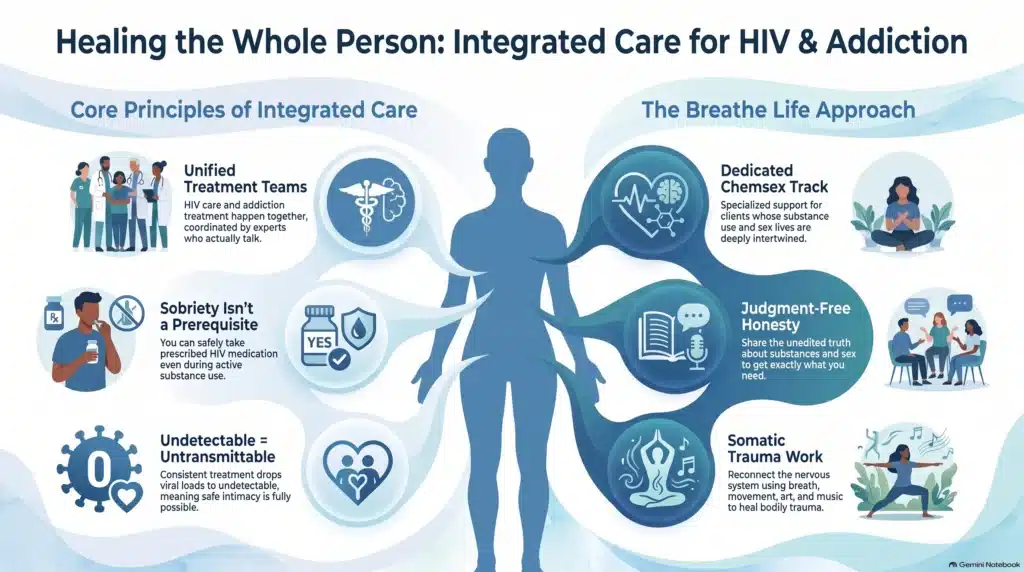
A thoughtful plan may include individual therapy, group therapy, skills work, family involvement, psychiatric support, and treatment for co-occurring issues. At Breathe, that may also include a more trauma-informed, whole-person approach that does not separate addiction from the rest of the person’s emotional life.
Good residential care should feel intentional. It should not feel like everyone is being dropped into the same routine without regard for what actually brought them there.
What Daily Life in Residential Treatment May Look Like
Structure, Therapy, and Recovery Skills
Daily life in residential treatment is usually more structured than life outside treatment, and that structure is part of the point. Days often include therapy, groups, skills-based work, clinical check-ins, and time for rest and routine. This kind of rhythm can help when someone has been living in survival mode, using substances to get through the day, or feeling emotionally overwhelmed most of the time.
A typical day may include a mix of individual work and group-based programming. Evidence-based therapies such as CBT, DBT, or motivational approaches may be part of treatment depending on the program and the person’s needs. These approaches can help people better understand triggers, emotions, patterns of avoidance, and the role substance use has been playing in their lives.
The goal is not simply to keep someone busy. It is to help them build understanding, stability, and more workable coping skills.
Experiential and Whole-Person Approaches Can Help Too
For some people, recovery work needs more than talk therapy alone. Experiential approaches such as art, movement, mindfulness, psychodrama, or other body-based and creative therapies can help people access emotions and patterns that are harder to reach through conversation only.
This can be especially important for people with trauma histories or people who feel disconnected from their body, emotions, or sense of self. A more whole-person treatment model can support healing on multiple levels, not just abstinence.
At Breathe, this kind of integrated approach is part of what helps treatment feel less like symptom control and more like deeper recovery work.
Why Trauma and Co-Occurring Mental Health Symptoms Matter
Substance Use Often Does Not Exist by Itself
Many people entering addiction treatment are also dealing with anxiety, depression, trauma, panic, eating disorder symptoms, or other mental health concerns. Sometimes those issues were there long before the substance use became severe. Other times they have intensified over time.
This matters because recovery often becomes much harder when treatment focuses only on the substance use and ignores the emotional pain underneath it. If someone is using to numb trauma, quiet panic, manage shame, or shut down overwhelming feelings, then the treatment plan needs to address those things too.
That is one reason integrated care matters so much in residential settings.
Integrated Treatment Can Be a Better Fit for Complex Cases
When addiction and mental health symptoms are feeding each other, integrated treatment is often more effective than trying to treat each issue separately. Instead of bouncing between disconnected providers or approaches, the person receives care that looks at the full picture at the same time.
For example, someone dealing with opioid use and panic attacks may need therapy, psychiatric support, medical monitoring, and practical recovery planning all working together. Someone else may need trauma-focused care alongside addiction treatment because the two are tightly linked.
This kind of coordinated care can make residential treatment a stronger fit for people who have tried simpler approaches and still felt misunderstood or stuck.
Frequently Asked Questions
How do I know if residential treatment is the right level of care?
Residential treatment may be worth considering if outpatient care has not been enough, relapse keeps happening, home is not stable or supportive, or the person needs more structure than they can get through weekly appointments. A formal assessment can help clarify whether this level of care fits the current risks and needs.
What if work or family responsibilities make it hard to commit to residential treatment?
That concern is very common. Residential treatment can feel like a major disruption, but for some people it is the interruption that allows healing to actually begin. If a full stay feels difficult to imagine, it can help to talk with a program about timing, practical concerns, and what step-down support might look like after treatment.
Can family be involved during residential treatment?
Often, yes. Many residential programs include family involvement through therapy, education, workshops, or planned communication. The exact role depends on the program, the patient’s needs, and what feels clinically appropriate.
What kind of support happens after residential treatment ends?
Good treatment planning should include aftercare before discharge ever happens. That may include outpatient therapy, step-down programming, psychiatric follow-up, support groups, recovery housing, alumni support, or a more individualized relapse prevention plan depending on the person’s needs.
How is medication-assisted treatment handled in residential care?
That depends on the person, the substances involved, and the program’s clinical approach. In many settings, medication-assisted treatment may be part of care for opioid or alcohol use disorders when it is clinically appropriate. The goal is to support safety, reduce cravings, and give recovery a stronger foundation.
What if I have been to residential treatment before and it did not help enough?
That does not mean treatment can never help. Sometimes the earlier program was not the right fit, important trauma or mental health issues were not fully addressed, or the aftercare plan was not strong enough. A new treatment experience may look very different when the plan is more individualized and better matched to what is actually going on.
Are there programs that provide more affirming or specialized care for specific communities?
Yes. Some programs offer more specialized support for people with trauma histories, co-occurring disorders, LGBTQIA+ identities, or other specific needs. Asking those questions during the admissions process can help you find an environment that feels safer, more relevant, and more supportive.
Preparing for Life After Residential Treatment
Recovery Does Not End at Discharge
One of the most important things to understand about residential treatment is that it is usually one part of a longer recovery process, not the entire process. Leaving residential care can feel hopeful, but it can also feel vulnerable. Real life returns quickly, and that is often when aftercare becomes just as important as the residential stay itself.
A strong aftercare plan may include step-down care such as PHP or IOP, outpatient therapy, support groups, sober living, family work, alumni support, or continued psychiatric care. The right combination depends on what risks are still active and what kind of structure will help the person stay connected to recovery.
The goal is not to create a perfect life before discharge. It is to create enough support that the person does not have to leave treatment and suddenly figure everything out alone.
A Good Plan Looks Beyond Sobriety Alone
Long-term recovery usually requires more than just not using substances. It often involves rebuilding routines, relationships, identity, health, work life, and the internal sense that life is worth protecting. That work takes time.
Aftercare planning works best when it includes not only relapse prevention, but also the practical and emotional parts of life that can either support recovery or undermine it. That may mean housing, structure, ongoing therapy, community, or healthier ways of dealing with stress and emotion.
Residential treatment can be the place where those next steps become clearer, not just the place where substance use stops for a while.
Conclusion
Residential treatment is not the right fit for every person with a substance use disorder. But when relapse keeps happening, life has become unstable, home is making recovery harder, or addiction is tangled up with trauma and mental health symptoms, it can be an important level of care to consider.
The most helpful treatment is not always the least intensive or the most intensive. It is the one that honestly matches the full picture. That is why careful assessment matters so much. The right recommendation should be based on what is truly happening, not on wishful thinking or fear of disruption.
At Breathe Life Healing Centers, residential treatment can be part of a broader continuum of care for people dealing with addiction, trauma, and co-occurring mental health concerns. If you are trying to understand whether a more structured setting may be the right next step, learning more about Breathe’s levels of care may help you move forward with more clarity.