


Let’s be real about something. Stopping meth after chemsex is not the same as just stopping meth. The drug did not exist in a vacuum for you. It was wrapped up in sex, connection, feeling free in your body and at one point may have been the only spaces where you felt like yourself.
That context matters, and most articles about meth withdrawal completely ignore it. This one will not.
No shame. No judgment. Just an honest conversation about what the next few days, weeks, and months might actually feel like and how to handle it.
What Does the Crash After Meth Feel Like?
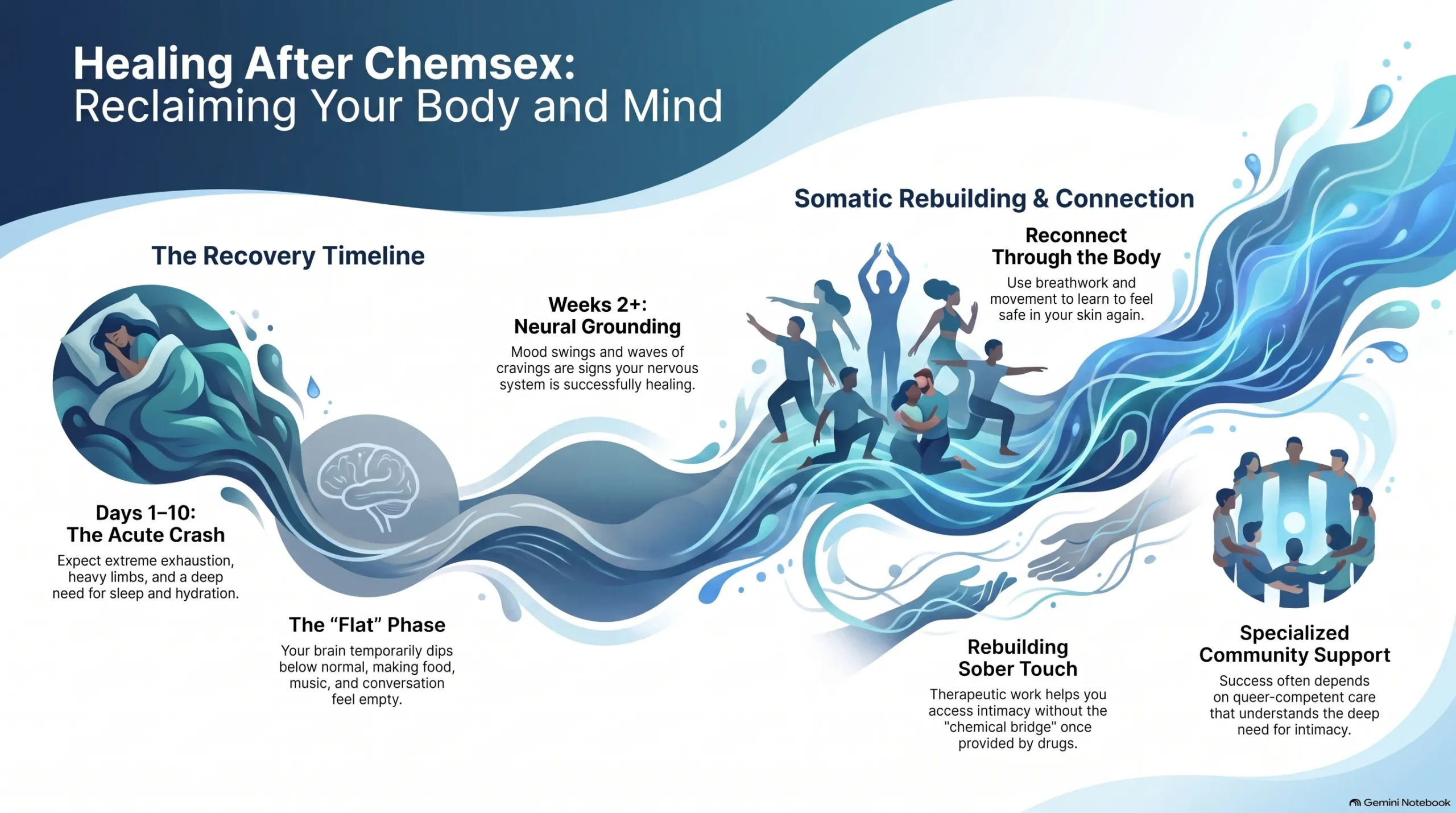
Within a day or so of your last use, everything stops. The energy, confidence, and the way your body felt open and electric are gone. What replaces it is a kind of exhaustion that is hard to describe if you have never felt it. Some might describe it as heavy, flat, or sluggish.
You are going to want to sleep, and you should let yourself. Your body has been running on fumes, and it needs to catch up. Eat something. Drink water. Sleep and sit with boredom. This part is your body doing what it is supposed to do in early recovery.
Why Do Things Feel Flat and Empty When You First Stop Using Meth?
Meth produces a level of pleasure and connection that your brain simply cannot replicate on its own, at least not right away. When it is gone, your brain does not just go back to normal; it dips below normal.
So food, a nice conversation, sun, and music you love, might produce nothing for a while [1]. This is not who you are, and it is not permanent. It is your brain healing, and it takes longer than most people expect.
The research puts the acute phase of withdrawal at around seven to ten days, but that flat feeling can linger in waves for weeks after [2]. In a chemsex context, this flatness hits different. Because what you are grieving is not just the high; you are grieving the version of yourself that felt confident, open, and desired and the version that could connect with people and experiences.
What Are the Cravings Like During Chemsex Recovery?
The cravings after chemsex are not just about the drug. They are about the feelings of intimacy the drugs may have once been providing. For many queer people, chemsex happened in the only rooms where they felt fully themselves, where their sexuality was not a problem to manage but something to embody.
When you stop, you are not just losing the meth. You are losing the ritual, community, and specific kind of closeness that came with it [3]. That is a more complicated loss than a chemical dependency, and it deserves more than a standard withdrawal protocol.
Somatic therapy and body-based approaches can help during recovery from chemsex because the intimacy and connection that drugs provided need to be rebuilt through the body, not just talked about in a session.
That might look like:
- Learning to feel safe in your own skin again through breathwork or movement.
- Slowly rebuilding the capacity for sober touch and closeness through therapeutic work that honors your sexuality rather than treating it as part of the problem.
- Using art therapy to externalize what a chemsex session actually meant to you and exploring themes such as freedom, belonging, and release.
- Practicing being physically present, whether in a group exercise or a body-based session with a somatic therapist, so that closeness starts to feel possible again without the chemical bridge that made it feel safe before.
The version of yourself that felt alive and present and desired in those rooms is not gone. Recovery is about finding a way back to them that does not require drugs to make it feel possible.
What Happens to Sex When You Stop Using Meth?
Sober sex might not feel the same for a while. It might feel flat, anxiety-producing, or like something that requires a level of vulnerability you are not sure how to access without substances. That is real, and it is not a sign that you are broken or that you will never enjoy sex again without drugs or alcohol [3].
What it means is that your brain and your nervous system need time to find their way back to pleasure through other pathways. It is one of the reasons chemsex recovery specifically is not just about stopping the drug, but about rebuilding your relationship with your body, desire, and intimacy on terms that are actually yours.
How Long Does It Take to Start Feeling Like Yourself Again?
The sharpest part of withdrawal, the crash, flatness, sleep problems, and cravings, hits hardest and typically eases within the first two weeks [1].
But for a lot of people who have been using regularly, especially in the context of regular chemsex sessions, it can take much longer. Mood swings that come out of nowhere, a wave of craving triggered by an app notification, or a boring Saturday night. Those waves mean your nervous system is still getting grounded, and that is exactly what healing looks like. The fact that you are still here, showing up, and choosing not to use is what matters.
What Actually Helps When You Are Going Through This?
The most honest answer? Not suffering alone. The people who get through meth withdrawal after chemsex are almost never the ones who do it by themselves in their apartment with the apps deleted and no support structure. They are the ones who had people around them who understood what they were actually going through, not just the meth part, but the craving for intimacy surrounding the use.
That might look like a therapist who gets it, a friend who has been through it, or a treatment program that was built for the queer community specifically, not just adapted for it.
Chemsex and Meth Recovery at Breathe Life
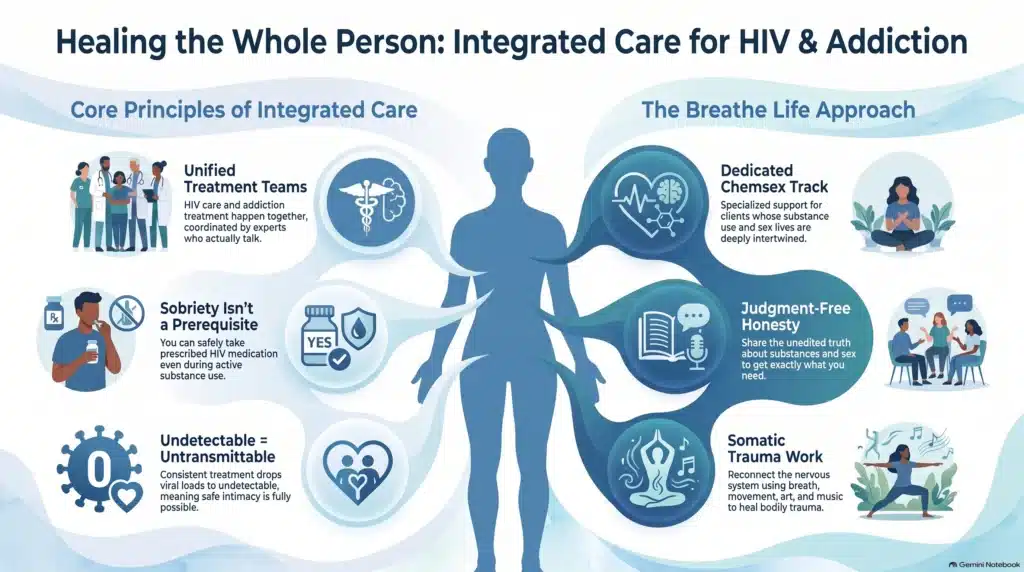
We have been doing this work since 2013. Our chemsex track is one of the only programs in the country built specifically for gay and queer people navigating sexualized drug use, with our own clinical workbook now in its fourth edition and a team that is made up of people from this community who have not only studied it but have lived it.
You will not have to explain what PnP means or justify your sexuality. You will not have to pretend the intimacy piece does not exist to access clinical care. When you are ready, we are here to support you. Contact our admissions team today.
Sources:
[1] McGregor, C., et al. (2005). The nature, time course and severity of methamphetamine withdrawal. Addiction, 100(9), 1320–1329.
[2] Li, M. J., & Shoptaw, S. J. (2023). Clinical management of psychostimulant withdrawal: Review of the evidence. Addiction, 118(4), 750–762.
[3] Giorgetti, R., et al. (2025). Drugs used in chemsex/sexualized drug behaviour: Overview of the related clinical psychopharmacological issues. PMC, National Library of Medicine.